What Your Wellness Programme Is Not Fixing.
Because May is Mental Health Awareness Month

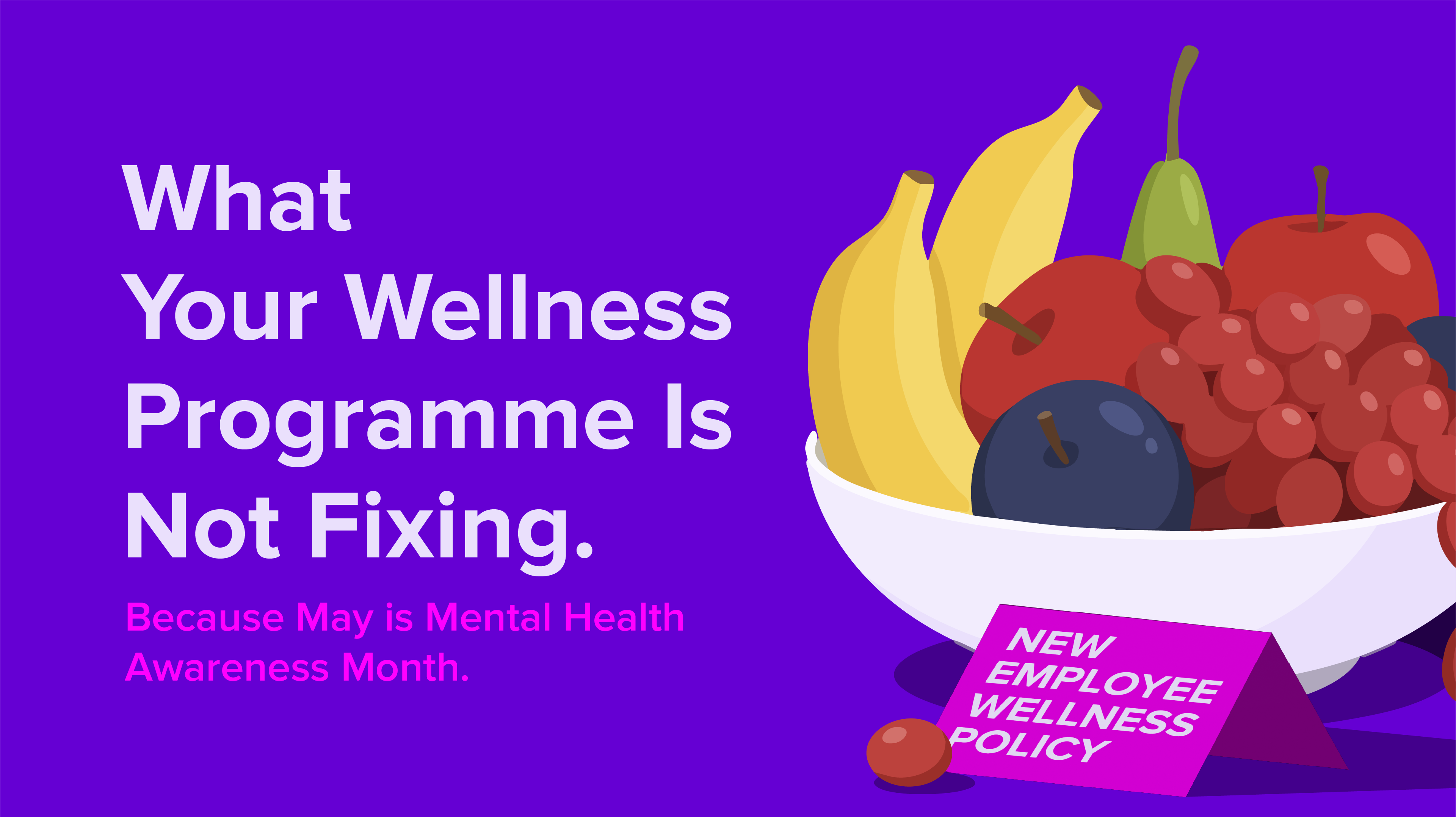
Let’s start with the fruit bowl.
The one that appeared one Monday morning in the kitchen, full of apples and bananas that nobody asked for. Someone in leadership had clearly attended a conference, come back energised, and decided that what the team really needed was a fruit bowl.
That is not a wellness programme. It is decoration. And somewhere between the fruit bowl, and the one-page PDF on “managing stress at work” that HR sent out in 2024 and never mentioned again, something important got lost.
May is Mental Health Awareness Month, and we are bringing it to the workplace. It is a long overdue conversation, but there is a version of “mental health awareness” that companies have that looks like this:
Acknowledge that mental health is important
Send a well-designed email in May
Continue scheduling the 7am meetings
Continue rewarding the person who never takes leave
Continue promoting the one who is visibly burning out but hitting their monthly targets
And then wonder why people seem disengaged.
The fruit bowl didn’t cause the problem and the fruit bowl is also not going to fix it. It’s the culture where being “always available” is celebrated and taking a full lunch break sounds like a taboo. It is the team that keeps shrinking and the workload that doesn’t.
Most companies that care about mental health have a policy that says so. Written down. Approved. What the policy rarely survives is the culture around it.
Culture is what happens when someone actually tries to use the mental health day, and their manager sends a meeting invite for that afternoon anyway. Culture is whether “how are you?” is a greeting or a genuine question. Culture is whether the person who says “I’m not coping” is met with support or noted as someone who can’t handle pressure. You can have the best mental health policy in the industry and still have a team that is running on empty. The policy is the floor and culture is everything above it. Most companies have spent considerable time and money on the floor while the ceiling is caving in.
This is not an indictment. It’s an invitation.
Most organisations genuinely want their people to be okay, but just haven’t connected the dots between the experience they want their employees to have and the decisions that create that experience every single day.
So what actually does the work?
Managers who check in before things break, not after. Workloads that are designed by humans for humans. Feedback cultures where people know where they stand before review season arrives. Leadership that models rest instead of just endorsing it in a meeting before going back to their two hundred unread emails.
All of this is harder than ordering a fruit bowl. It is the actual work, and it is worth doing. It is okay to not be fine. The performance of okayness is its own kind of exhaustion, and you do not have to keep doing it.
The best thing a workplace can do for mental health is make it safe to tell the truth, so let us start there. The fruit bowl can stay if you want it to. But start there.
The People Practice works with organisations to build the kind of cultures where people actually flourish, not just function. If this piece made you think about your team, your organisation, or yourself; we’d love to talk.
If workplace culture conversations like this interest you, listen to OnPeople Podcast by The People Practice, where we unpack the human side of work, leadership, and culture in practical ways. Find us wherever you stream your podcasts.
We’re Hiring at The People Practice
If building better workplaces excites you, explore our open roles and apply.
